Thursday, May 30, 2019

Karyotypes


Karyotypes

Definition: the number and visual appearance of the 
chromosomes in the cell nuclei of an organism or species.

Autosomes: Any chromosome that is not a sex chromosome(22 pairs)
Sex chromosomes is a chromosome involved with determining the sex of an organism, typically one of two kinds


  1. Gitig, Diana. "Some Genetic Disorders May Be Caused By Defects We Couldn’T Detect". Ars Technica, 2019, https://arstechnica.com/science/2016/11/some-genetic-disorders-may-be-caused-by-defects-we-couldnt-detect/.

  2. Reflection
  3. Karyotypes are something that I was not familiar with and still I have a lot to learn about them because this is the first year i've ever learned about it

R

Nitrogen Cycle

"Nitrogen Cycle | Bioninja". Ib.Bioninja.Com.Au, 2019, http://ib.bioninja.com.au/options/option-c-ecology-and-conser/c6-nitrogen-and-phosphorus/nitrogen-cycle.html.
The nitrogen cycle is the series of processes by which nitrogen and its compounds are interconverted in the environment and in living organisms, including nitrogen fixation and decomposition.
Step 1 - Nitrogen Fixation - Nitrogen is absorbed into organic compounds
Step 2 - Nitrification - oxidation of ammonia or ammonium to nitrite
Step 3 - Ammonification - Bacteria or fungi convert the organic nitrogen within the remains back into ammonium
Step 4 - Denitrification -  the loss or removal of nitrogen or nitrogen compounds

Monday, May 13, 2019

Abiogenesis


ABIOGENESIS

Image result for abiogenesis

  • Abiogenesis is basically the origin of life
  • States life on earth originated from non-living compounds
  • Not scientifically proved
  • Life was created by an almost impossible scenario including gases

Thursday, May 9, 2019

Sickle Cell Anemia - Reagan Peters


-Sickle Cell Anemia is a condition that causes some of a person's red blood cells to become misshapen and unhealthy.
-Might cause joint pain, sudden chest pain and shortness of breath.
-Causes blood to clot easier.
-Life expectancy: 48 years average.

Summary: Sickle Cell Anemia is a life-altering disorder. There is no care but there are some treatments. This was the most interesting blog topic I've researched so far.

“Sickle Cell Disease (for Teens).” Edited by Robin E. Miller, KidsHealth, The Nemours Foundation, July 2018, kidshealth.org/en/teens/sickle-cell-anemia.html.

Mutations - Grace Moore

What a mutation is

A mutation is when a DNA gene is damaged or altered in such a way as to alter the genetic message carried by that gene. 

Though when dealing with genetics there are no normal, mutations often some u physically in the form of what is not seen as normal or common, like having an extra finger.  

A mutation is either due to mistakes when the DNA is copied or as the result of environmental factors such as UV light and cigarette smoke.
“Basic Genetics.” Https://Kintalk.org, kintalk.org/genetics-101/.

Cell Organelle: Ribosomes

Cell Organelle: Ribosomes 
•Ribosomes are protein builders or the protein synthesizers of the cell•
Facts 
•Ribosomes are special because they are
found in both Prokaryotes and Eukaryotes 
•There organelles composed of ribosomal
proteins and ribonucleic acids 
•Ribosomes translate information from the cell nucleus
•Ribosomes translate information encoded in messenger ribonucleic acid (mRNA)
•They can link up with animo acids at the rate of
200 per minute


“Ribosome.” British Society for Cell Biology, bscb.org/learning-resources/softcell-e-learning/ribosome/.

Human Genome Project

Human Genome Project


The Human Genome Project is an international research project that studied the sequencing of nucleotide base pairs and the combinations for the DNA makeup of humans.

About the Human Genome Project: 

- The HGP has revealed that there are probably about 20,500 human genes.
- Was made as a detailed information about the structure, organization and function of the complete set of human genes.
- The Human Genome Project formally began in 1990 and was completed in 2003.
- The Human Genome Project has already found the discovery of more than 1,800 disease genes.
- There are now more than 2,000 genetic tests for human conditions.

Citations:

- “Human Genome Project Information Archive1990–2003.” Human Genome Project Information, web.ornl.gov/sci/techresources/Human_Genome/index.shtml.
- “The Human Genome Project.” NHGRI​, www.genome.gov/human-genome-project.

Alcohol Fermentation

Definition: A process in which some sugars (as glucose) are converted into alcohol and carbon dioxide by the action of various yeasts, molds, or bacteria

The main purpose of it is to create/produce ATP
It allows you to make ATP anaerobically


Citations: https://www.merriam-webster.com/medical/alcoholic%20fermentation
                 https://www2.estrellamountain.edu/faculty/farabee/BIOBK/BioBookGlyc.html

Incomplete Dominance.

Image result for incomplete dominance
Incomplete Dominance is a phenomenon that occurs when both sets of alleles combine to create a hybrid of both alleles to show a new result.

An example of this is combining a red and white flower to make pink flowers.

I have learned that genetics can sometimes combine to make something new.

Wednesday, May 8, 2019

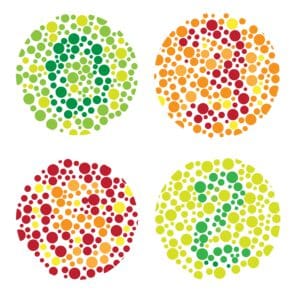
Color Blindness

Image result for color blindness
-Difficulty distinguishing certain colors
- Often Inherited
-Different types of color blindness


Summary: Color blindness has many different branches, some affected by color blindness may be able to see certain colors and other people who are color blind cannot. If you are colorblind, you have difficulty distinguishing certain colors, such as blue and yellow or red and green. Often color blindness is inherited, also affects more men than women.

Citations: Kate Rauch. “How Color Blindness Is Tested.” How Color Blindness Is Tested, Kate Rauch, www.aao.org/eye-health/diseases/how-color-blindness-is-tested.

(Shelby Goff)

Cell Organelles: The Nucleus

Functions of the Nucleus: The nucleus has two main functions including storing the cells genetic information such as DNA and coordinating the cells activities.

Where is it found? The nucleus can be found in Eukaryotic cells within an enclosed nuclear membrane.

The activities the nucleus must coordinate include metabolism, growth, protein synthesis, and reproduction

Reflection: What I learned about the nucleus is that it is the control center of the cell. The nucleus holds all the genetic information necessary for the cell including DNA. I also learned that the nucleus in found within advanced cells called Eukaryotes. Something that surprised me about the nucleus was all of the functions it must carry out as it is the control center and the cells activities revolve around it. I had learned about this earlier in the year but it was good to refresh on this information. I like this objective because I think it is interesting to learn about cell parts and their functions.

Citations:
Molecular Expressions Cell Biology: The Cell Nucleus, micro.magnet.fsu.edu/cells/nucleus/nucleus.html.

"Cell Nucleus.” Wikipedia, Wikimedia Foundation, 26 Apr. 2019, en.wikipedia.org/wiki/Cell_nucleus.

“Daniel Nelson.” Science Trends, sciencetrends.com/function-nucleus-plant-animal-cells/.


By, Katelyn Allen

Protein Synthesis

Protein Synthesis

- Protein Synthesis is a complex process that begins with the supply of amino acids to charge the transfer of RNA molecules
 
Transcription                                                                        Translation
----------------                                                                     ------------------
The first step in gene expression.                        Process in which ribosomes in the                                                                                                            cytoplasm or ER synthesize proteins.
                                                               

Why it is important- Proteins are important in all cells and do different jobs, such as incorporating carbon dioxide into sugar in plants and protecting bacteria from harmful chemicals.


Reflection: Protein synthesis plays an important role in giving energy to the cell and allowing it to be able to function in the ways it needs to. 


Cites: 
https://biologywise.com/protein-synthesis-process
https://www.sciencedirect.com/topics/medicine-and-dentistry/protein-synthesis

Color Blindness
Maggie Odenbrett
*We learn about this disorder because it is an easy representation of a genetic disease. We can who color blindness effects through family trees using pedigree charts.
*This is relevant to what we are learning now because using punnet squares we can determine the genomes of offspring and determine the likelihood of a colorblind child.

SIDE, BRIGHT. “How Color Blind People See the World.” YouTube, YouTube, 18 Sept. 2017, www.youtube.com/watch?v=GCQE1U2EQ_4. 

Antibiotics

What are antibiotics? 
Antibiotics are also known as antibacterial, but antibiotics are medications that destroy or slow down the growth of bacteria.


  • They include a range of powerful drugs to help treat diseases caused by bacteria.
  • Antibiotics can not treat viral infections for example like the flu.
Reflection:
I learned that antibiotics is medicine that helps with diseases caused by bacteria. There are also many different types of antibiotics to help with all different types of bacteria. These antibiotics don't help with viral infections.

Citation:
http://gmpmedical.com/what-antibiotics-do-gut-health/
Hemophilia
Maggie Odenbrett

*This is a hereditary disease in which the hemophiliac lacks the blood clotting factor.
    *Without the blood clotting factor a small break in the skin could lead to death.
*We learn about this disease because it is passed from parent to offspring, genetically.
*I learned that with the help of pedigree charts and punnet squares you could determine the likelihood of an offspring having the disease, before they are even born!
*I enjoyed learning about this disease because I am interested in the way biology actually relays into everyday life. Such as its importance in the medical community.

“Hemophilia - Genetics Home Reference - NIH.” U.S. National Library of Medicine, National Institutes of Health, ghr.nlm.nih.gov/condition/hemophilia. 

Carbon cycle - Sarah Gibson


The carbon cycle:  Series of processes by which carbon compounds are interconverted in the environment, involving the incorporation of carbon dioxide into living tissue by photosynthesis and its return to the atmosphere through respiration, the decay of dead organisms, and the burning of fossil fuels.

Info: All living things are made of carbon. Carbon is also a part of the ocean, air, and even rocks. Because the Earth is a dynamic place, carbon does not stay still. carbon dioxide is a greenhouse gas and traps heat in the atmosphere. Without it and other greenhouse gases, Earth would be a frozen world. 

Summary: The carbon cycle is very important and carbon itself is a fundamental building block for the Earth. Without the carbon cycle, many organisms would not be able to survive and the Earth would be in danger.


citations: The Carbon Cycle, eo.ucar.edu/kids/green/cycles6.htm.

Nucleus - Molly King

The nucleus is like the brain of a cell. It holds chromosomes that DNA. It is only in eukaryotic cells. It is surrounded by a double lipid bilayer. The nucleus controls the movement and everything like that.


I learned that the nucleus has a double lipid bilayer.

Passive VS Active Immunity

- Active immunity is the body's response to an unknown pathogen

- Active is not immediate, your body needs time to build up antibodies against the new pathogen.

- On the other hand, passive immunity is the response gotten from antibodies outside of your body.

- For example, when a mammal nurses her young, the baby gets antibodies from her milk that help build up its immune system.

- Passive is also immediate, there isn't a wait for the antibodies to build up.

- Active has a long term effect, and passive tends to have a short term effect.


Monday, May 6, 2019

Symbiotic Relationship: Mutualism


What is it?

-its the interaction between two or more species where both species benefit from this relationship.
-this is a very common symbiotic relationship, it is present in every ecosystem, and there are plenty of examples everywhere around us, a very common example is the Oxpeckers and zebras, the bird lives on the zebra and feeds off all the bugs and parasites living on the zebra's skin.


“AG ARCHIVES: MUTUALISM.” You Are Being Redirected..., aquarium.org/tag/mutualism/.

Sunday, May 5, 2019

Causes of Mutation- Kylie Dye

Causes of Mutation- Kylie Dye


Mutations can occur through:

  • Environmental factors 
       (Example: Radiation from the sun)
  • Error when DNA is copying itself


Summary:

In this blog post, I learned about the causes of mutations. It surprised me that mutations can happen due to the sun. I did not know much about this before, other than the fact that mutations were a mistake, or most the time bad. This objective is quite interesting to me and I would like to know more about it. This can help me if I or any of my friends/family get a mutation. I can also be cautious when I am out in the sun or doing something else that could cause a mutation.


Citations:

Evolution.berkeley.edu. (n.d.). The causes of mutations. [online] Available at: https://evolution.berkeley.edu/evolibrary/
article/evo_20 [Accessed 5 May 2019].


Reference, G. (n.d.). What is a gene mutation and how do mutations occur?. [online] Genetics Home Reference. Available at: https://ghr.nlm.nih.gov/primer/mutationsanddisorders/genemutation [Accessed 5 May 2019].

Karyotypes

Karyotypes Definition:  the number and visual appearance of the  chromosomes in the cell nuclei of an organism or species. ...